Date: 12th Aug 2026
An Artist Shaped by Time
A Conversation on Persistence, Transformation, and the Power of Art
Some artistic journeys begin in classrooms or formal studios. Others begin much closer to home.
For this artist, the first canvas was the neighborhood itself.
Long before galleries, exhibitions, and artistic societies became part of his life, he was drawing and painting on walls, discovering a creative language that would eventually evolve into a lifelong artistic practice spanning painting, sculpture, printmaking, and multiple artistic movements.
His story is deeply intertwined with the development of Bahrain’s modern art scene. Through decades of artistic experimentation, mentorship, community engagement, and personal hardship, he has remained committed to one principle: art is a practice that requires continuous work, curiosity, and perseverance.
In this conversation, he reflects on the people who shaped his artistic identity, the accident that transformed his relationship with creation, and the messages that continue to define his work today.
The Beginning
Art in the Neighborhood
When asked about the origins of his artistic journey, he doesn’t speak of academic institutions or formal training. Instead, his memories return to his neighborhood, where creativity was part of everyday life.
“ My beginning was very simple, I started by painting on walls in the neighborhood. ”
A pivotal influence came through his neighbor, Eman Aseeri, who was a member of the Arts Talents Association. Through this connection, he was introduced to an extraordinary cultural community that included visual artists, theater practitioners, writers, journalists, and poets.
Among those he remembers are artists Hussain Sunni, Ahmed Sunni, and Aziz Zubari, figures he still speaks of with deep admiration. Many of them, he notes, are no longer with us.
The association became far more than a gathering place. It became a creative home.
“ There, I met artists, writers, journalists, and poets. Sometimes I helped with stage décor, and sometimes I painted. That was really the beginning.”
The environment encouraged experimentation and participation, giving him the confidence to see himself as an artist.
Finding an Artistic Voice
Although his creative instincts emerged early, his artistic voice began to take shape through active participation in Bahrain’s growing art community.
By the late 1960s, he had joined the Arts Talents Association. In 1972, he became a member of the Contemporary Arts Society, and in 1973, he participated in an exhibition that marked an important milestone in his career.
During this period, he regularly visited the studio of Karim Al Orayedh, a gathering place for many of Bahrain’s artists.
“ It was an important experience because many artists came together there. Some of them I had known since my school days. ”
He also recalls the profound influence of his teacher, Hussain Al Thaqafi, who worked in handicrafts rather than fine arts.
“ He discovered me. He was surprised that someone my age could draw so well. ”
Drawing had always come naturally to him. Yet talent alone wasn’t enough. His development was shaped by artistic communities, conversations, and a constant desire to learn.
He remained active within Bahrain’s artistic societies throughout the following decades, later becoming involved with the Fine Arts Society, established in the late 1980s.
Learning Through Technique and Experimentation
Unlike many artists who follow a traditional fine arts education, he attended a vocational high school, where he studied technical drawing.
The experience transformed his understanding of visual composition.
“ It taught me perspective — first perspective, second perspective, third perspective. Before that, I didn’t really understand what perspective meant. ”
The technical knowledge he gained gave him a stronger foundation and allowed him to recognize and correct weaknesses in his earlier work.
His artistic curiosity eventually led him beyond painting.
He began experimenting with sculpture, recognizing the close relationship between anatomy, drawing, and three-dimensional form.
“ If you understand the anatomy of the human body, you can both draw and sculpt.”
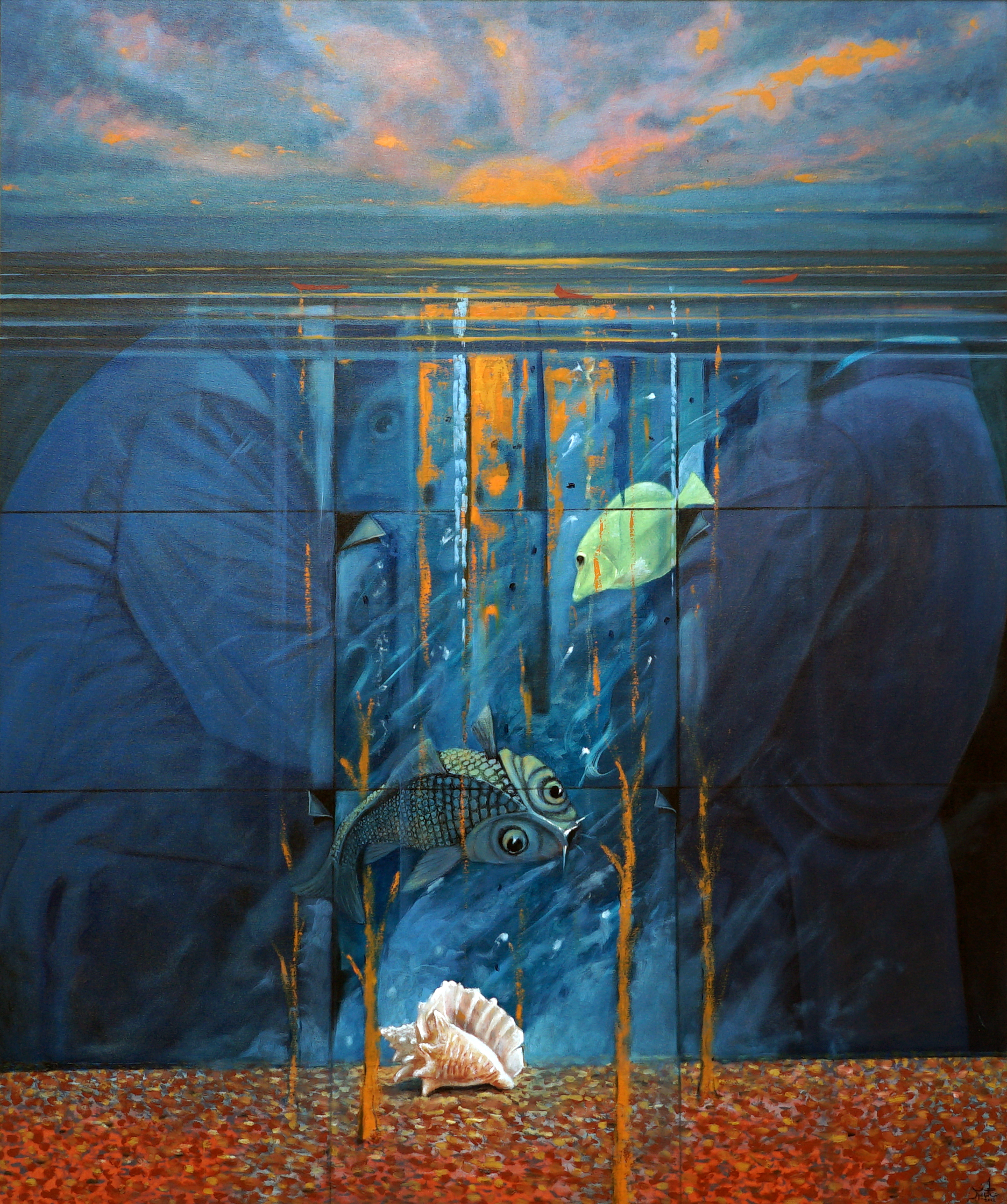
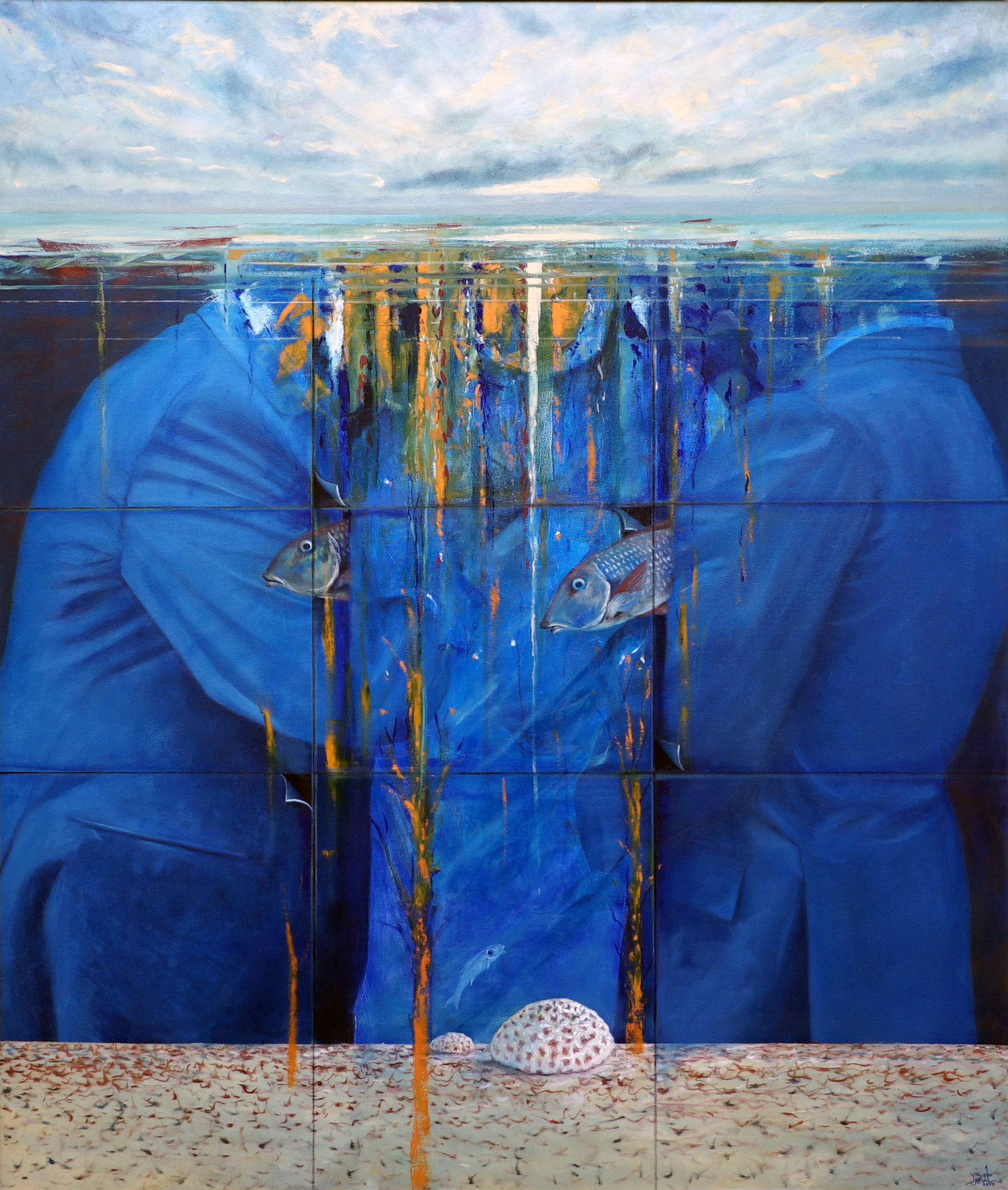
Over time, he explored numerous artistic movements, including surrealism and cubism, refusing to confine himself to a single style.
Books became another essential source of education.
“ Whenever I had money, I bought books.”
His artistic education was built through observation, self-study, experimentation, and an unwavering commitment to expanding his knowledge.
When Tragedy Reshaped the Artist's Journey
One of the defining moments of his life came during the early years of the Gulf War.
At the time, he was working with vocational students who were completing their practical training. He was responsible for the molding department and was in the middle of a work assignment when he stepped away for a lunch break.
When he returned, a tragic accident changed everything.
He slipped near an industrial machine and suffered a devastating injury that resulted in the loss of several fingers on one hand. For an artist whose life had always revolved around drawing, painting, and creating, the consequences were unimaginable.
The injury not only affected his physical ability to work but also forced him into a prolonged period of silence. For two years, he was unable to paint.
Although he recounts the experience with remarkable composure, the emotional impact was profound.
An artist whose identity had always been inseparable from the act of creation suddenly found himself confronting the possibility of losing the very thing that had defined him since childhood.
Yet the accident did not mark the end of his artistic journey. Instead, it became one of the most extraordinary chapters of his life.
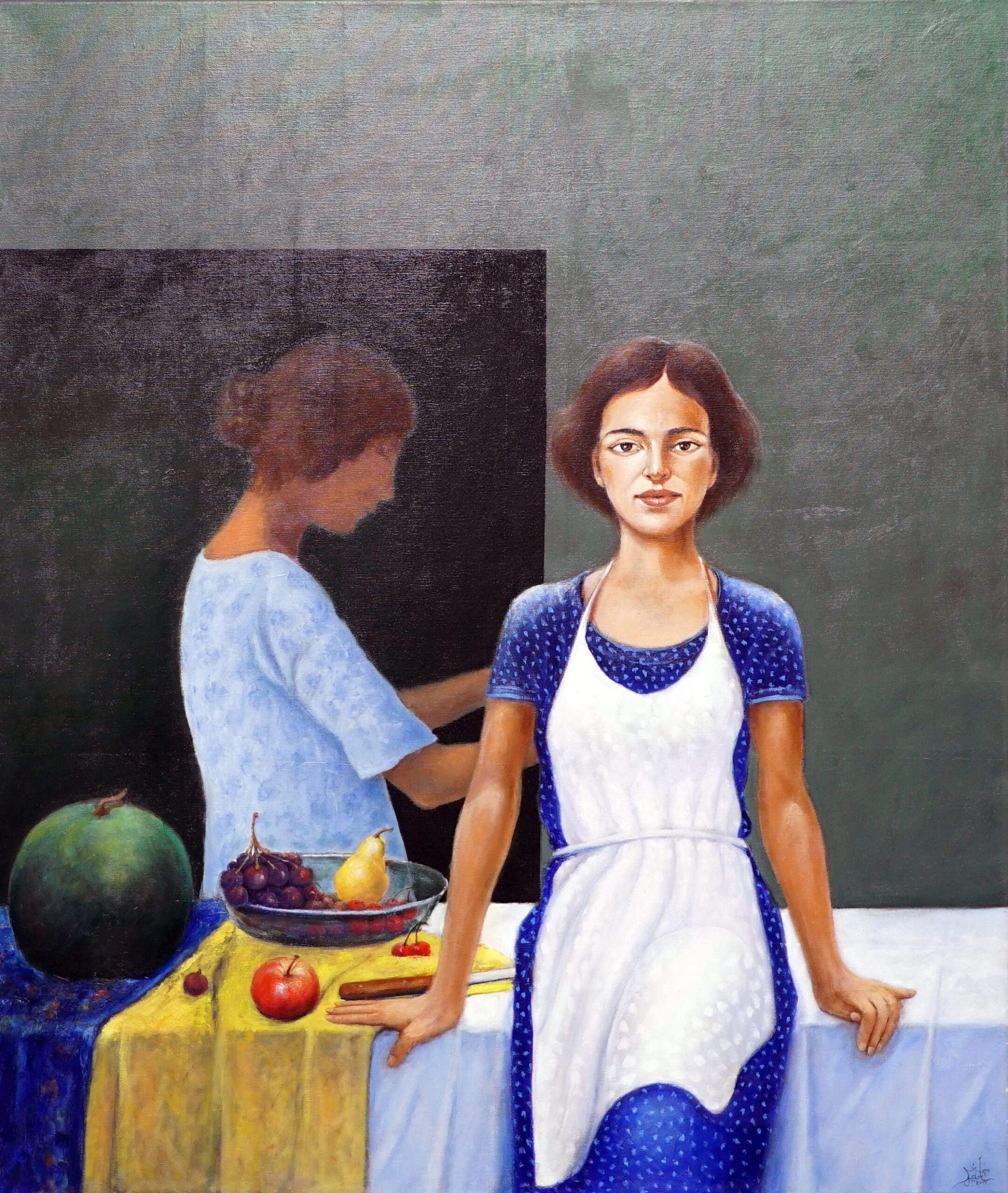
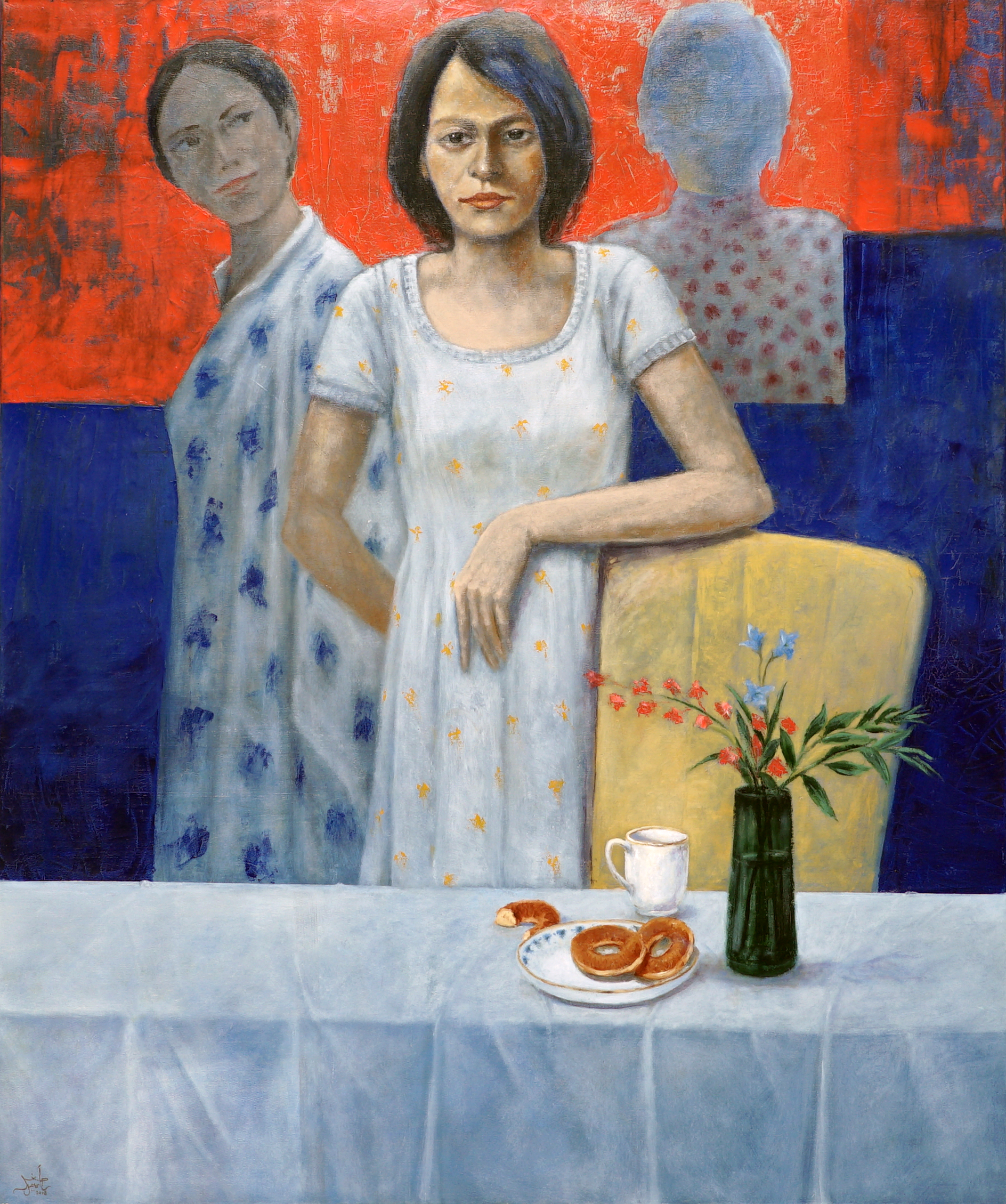
Determined not to surrender to tragedy, he made the courageous decision to teach himself to paint with his other hand. What began as an act of necessity evolved into a remarkable artistic transformation. Through persistence, patience, and years of practice, he not only regained his ability to create but developed a more mature artistic language.
His paintings became more refined, more detailed, and more technically accomplished than ever before.
What could have been the end of an artist’s career became the beginning of a new chapter. His story is not simply one of survival but of reinvention—a powerful reminder that creativity can endure even the greatest loss.
“ My art covers many schools and disciplines. Some artists choose one direction. I chose many.”
Creating with Purpose
For him, art has never been purely aesthetic.
His paintings carry messages shaped by years of interaction with artists, writers, poets, and the wider community.
“Most of my work carries a message.”
Those messages emerge naturally from lived experience, cultural engagement, and careful observation.
His work speaks not only to artistic concerns but also to social realities and human relationships.
A Final Message to Artists
When asked what advice he would offer artists facing physical or emotional challenges, his answer is immediate.
“Art is daily work.”
Creativity, he believes, should be practiced continuously.
“I don’t waste my time. If I have free time, I start working on something that can benefit me or benefit others.”
Perhaps this philosophy explains why he has spent decades moving effortlessly between painting, sculpture, printmaking, and multiple artistic movements.
Unlike artists who choose a single path, he has always embraced exploration.
His journey is a testament to resilience, lifelong learning, and the belief that artistic growth never truly ends.
For him, art is not simply a profession or a passion. It is a way of living.